10 Offshore Team Mistakes That Kill Staffing Success


Key Takeaways
- Long-term offshore staffing success requires building sustainable infrastructure around top-tier remote Filipino talent.
- Most offshore teams struggle because of decisions made before employees even log in. Gaps in role planning and choosing the wrong hiring model are what usually break the strategy later on.
- When remote hires underperform, it’s rarely a lack of skill. It’s almost always the result of a rushed onboarding process, vague success metrics, and a lack of consistent communication rhythms.
- To scale successfully, you have to stop treating remote talent like temporary task-checkers. Treat them like a true extension of your core team.
- Protecting your hiring ROI takes more than just sending over a job description. You need a structured approach and the right remote staffing partner that covers everything from data-driven salary benchmarking and strict candidate vetting to long-term retention planning.
What Are Offshore Team Mistakes?
Offshore staffing mistakes are operational, compliance, and management misalignments that occur when a business treats international talent acquisition as a transactional task-outsourcing rather than strategic team integration.
While offshore staffing can help businesses access skilled global talent, increase capacity, and reduce hiring costs, its success greatly depends on how well the team is planned and managed.
The right offshore hire can become a long-term contributor. However, the wrong setup can lead to confusion, low productivity, turnover, and frustration on both sides.
Why Do Offshore Teams Fail?
Offshore teams usually fail because businesses focus too much on filling seats and not enough on building a working system. Even strong offshore talent can struggle if the role is unclear, onboarding is rushed, communication is inconsistent, or managers do not know how to lead remote employees.
Most offshore staffing problems are preventable. They are the result of gaps in preparation, not a lack of talent. Companies that define the role, choose the right staffing partner, and build clear management rhythms are more likely to create offshore teams that perform and stay.
1. Hiring without a clear role definition
One of the biggest offshore team mistakes is hiring before clearly defining the role.
If the job description is vague, the provider may source the wrong candidates, the employee may misunderstand expectations, and managers may judge performance inconsistently.
A strong role definition should include:
- Job title
- Main responsibilities
- Required skills
- Nice-to-have skills
- Tools and software
- Reporting line
- Working hours
- Success metrics
- First 30, 60, and 90-day expectations
- Communication requirements
Without this clarity, offshore staffing becomes guesswork. The candidate may be capable, but if the role is not properly scoped, success becomes difficult to measure.
How to avoid this mistake
Before hiring, document what the person will own, what outcomes they are responsible for, and how performance will be evaluated. If you are unsure which role to hire first, use a remote strategy session to identify the highest-impact position before starting recruitment.
2. Choosing the lowest-cost provider instead of the right partner
Low upfront rates often mask weak sourcing, hidden fees, and inadequate post-hire management. The resulting bad placements and high turnover ultimately cost far more than a quality-first partnership.
A good staffing provider should help you reduce hiring risk, not simply send candidates faster.
How to avoid this mistake
Compare providers based on sourcing process, candidate screening, communication checks, pricing transparency, onboarding support, replacement policy, and retention strategy. If you are comparing options, review client pricing options to understand how different service models may work.
3. Skipping salary benchmarking
Skipping salary benchmarking can lead to unrealistic expectations, weak candidate pools, or early turnover. Offshore hiring is cost-effective, but that does not mean businesses should underpay skilled professionals or rely on outdated assumptions about compensation.
Salary expectations vary based on:
- Role type
- Seniority
- Technical skill level
- Industry experience
- Communication requirements
- Time zone overlap
- Full-time or part-time setup
- Candidate demand
If the salary range is too low, the provider may struggle to attract qualified candidates. If the range is unclear, both sides may waste time during interviews.
How to avoid this mistake
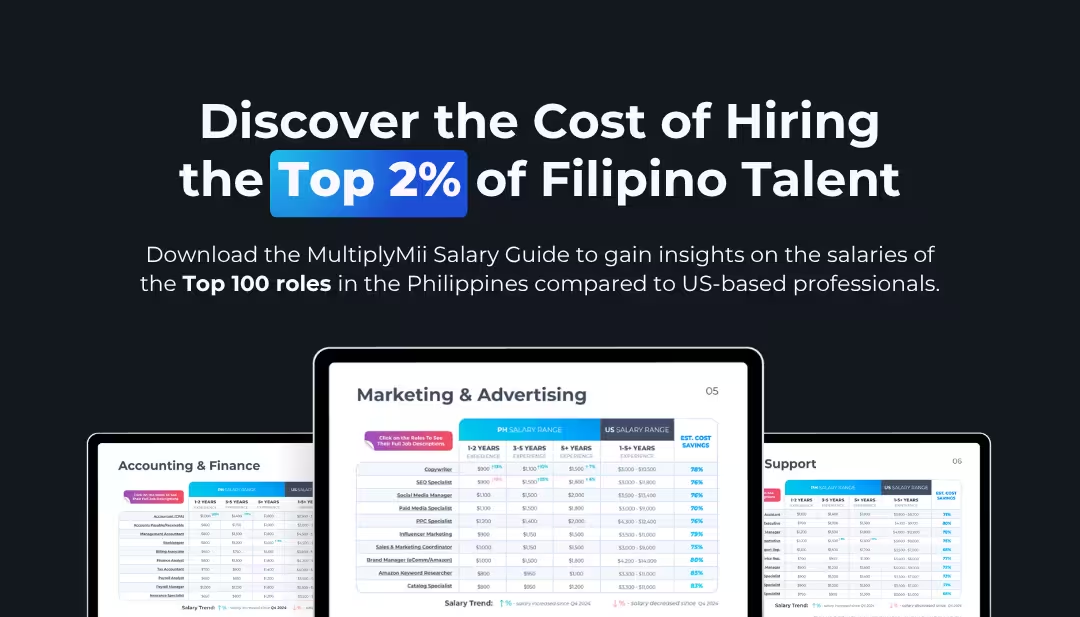
Benchmark salary ranges before opening the role. Use MultiplyMii’s salary guide to compare compensation expectations for common Filipino remote roles and plan a realistic hiring budget.
4. Treating offshore talent like basic task support
Another major mistake is assuming offshore talent should only handle simple or repetitive tasks. Many Filipino remote professionals can support complex roles in operations, marketing, finance, eCommerce, customer support, project management, design, development, and leadership support.
When companies treat offshore hires as low-level task workers, they often underuse their skills. This can lead to disengagement, slower growth, and missed opportunities to build a stronger team.
How to avoid this mistake
Think of offshore hiring as team building, not just task delegation. Define roles around outcomes and responsibilities rather than only assigning leftover work.
5. Rushing the hiring process
Rushing offshore hiring can lead to poor role fit, weak screening, skipped interviews, and unclear expectations. Hiring quickly may feel productive, but moving too fast often creates problems during onboarding and performance management.
A rushed hiring process often looks like this:
- The role is not fully defined.
- The salary range is unclear.
- Candidates are reviewed too quickly.
- Interviews are inconsistent.
- References or skills checks are skipped.
- The start date is prioritized over fit.
- Onboarding is not ready.
Speed matters, but speed without structure creates risk.
How to avoid this mistake
Set a realistic hiring timeline and keep the process structured. If the role is urgent, communicate that early and ask what can be accelerated without weakening candidate quality.
Companies that need flexible or urgent support can explore our Talent Overflow Program.
6. Providing weak onboarding
Weak onboarding is one of the fastest ways to damage offshore staffing success. According to a 2025 Enboarder report, nearly 29% of HR leaders report that hiring managers fail to provide proper guidance or training to new hires.
Even a strong candidate can struggle if they are unfamiliar with the tools, expectations, communication norms, workflows, or success metrics.
Offshore employees need a clear start because they are joining a remote environment. They cannot rely on office context, casual conversations, or in-person observation to understand how things work.
How to avoid this mistake
Prepare onboarding before the hire starts. Create a first-week plan, schedule early check-ins, provide written SOPs, and define what success looks like in the first 90 days.
Read: The First 30 Days of Remote Employee Onboarding
7. Not setting clear communication rhythms
Offshore teams struggle when communication is inconsistent, unclear, or too reactive. Remote work requires intentional communication because team members may be working across different locations, time zones, and schedules.
Clear communication rhythms help offshore employees know:
- When to provide updates
- Which channels to use
- Who approves work
- How quickly to respond
- When to escalate issues
- What meetings are required
- How progress is tracked
Without these norms, managers may feel out of the loop and employees may feel unsure about priorities.
How to avoid this mistake
Set communication rules during onboarding. Define daily, weekly, and monthly rhythms based on the role.
8. Giving too much access too soon
Giving offshore team members full access to systems, files, financial tools, customer data, or passwords too early can create security and compliance risks. Access should match the person’s role, trust level, and responsibilities.
This mistake is especially risky for teams handling:
- Customer information
- Payroll data
- Financial records
- Internal documentation
- Ecommerce platforms
- Advertising accounts
- CRM systems
- Banking or payment tools
- Password vaults
How to avoid this mistake
Use role-based access from day one. Give the employee access only to what they need to perform their work. Review permissions regularly and remove access immediately during offboarding.
Best practices include:
- Multi-factor authentication
- Password manager use
- Role-based permissions
- Separate admin access
- Access logs
- Quarterly access reviews
- Clear offboarding checklist
9. Ignoring retention until someone resigns
Many companies think about retention only after a strong offshore employee resigns. By then, the warning signs may have been visible for months: unclear growth path, low engagement, poor feedback, unrealistic workload, or below-market compensation.
Retention should be built into the offshore staffing strategy from the beginning.
Common retention risks
- Salary is not competitive
- Role is unclear
- Workload is too heavy
- Feedback is inconsistent
- Career path is missing
- Manager communication is weak
- Employee feels isolated from the team
- Good work is not recognized
- Responsibilities grow without role review
How to avoid this mistake
Create a retention plan that includes fair pay, regular feedback, recognition, growth opportunities, and workload review. Strong offshore teams stay longer when they feel included, supported, and aligned with business goals.
10. Measuring activity instead of outcomes
Measuring only activity can make offshore staffing feel productive without proving business value. Hours worked, messages sent, or tasks completed do not always show whether the role is helping the business grow.
Offshore employees should be evaluated based on outcomes that match their role.
How to avoid this mistake
Before the talent logs in on day one, establish a structured performance framework tied directly to departmental growth goals. Stop auditing time cards and start auditing deliverables.
Build a 30-60-90 day roadmap that clearly defines what "success" looks like at each milestone, and evaluate performance using structured, outcome-based scorecards during regular management reviews.
Offshore Team Success Checklist
Before you open a role or partner with an offshore staffing provider, run your offshore strategy through this operational checklist. If you can’t confidently check every box, you are likely introducing unnecessary risk to your hiring ROI.
What Is the Best Way to Avoid Offshore Team Mistakes?
The best way to avoid offshore team mistakes is to plan the role, hiring model, salary range, onboarding process, communication rhythm, and management structure before recruitment begins.
To ensure long-term stability and high performance, a great offshore strategy must account for the following foundational pillars before a single candidate is interviewed:
- Strategic Scoping: Defining the role by its target outcomes, key performance indicators, and concrete 30-60-90-day expectations rather than a loose list of daily tasks.
- Frictionless Compensation: Aligning your budget with localized market data by combining competitive base pay with a unified fringe benefit stipend. This premium approach eliminates administrative complexity for you while providing the talent with essential professional security.
- Day-One Readiness: Designing structured, outcome-driven onboarding frameworks and establishing clear role-based access controls to safeguard data without bottlenecking productivity. Book a remote strategy workshop to ensure efficiency.
- Proactive Management Rhythms: Setting intentional, asynchronous communication loops and growth paths to protect your hiring ROI and prevent early turnover.
When remote talent is fully integrated into your core business operations rather than treated as just task support, they become critical drivers of growth across business operations.
Building an Offshore Team That Actually Works
Maximize your hiring ROI and eliminate the friction of scaling global teams!
True offshore staffing success is the direct result of building a deliberate, scalable system around your global talent. High-performing remote teams thrive when they are supported by meticulous role scoping, structured onboarding, transparent communication, secure data access, and a frictionless retention framework.
Ready to design a remote staffing framework that delivers the results you need for successful scaling? Speak with our remote talent acquisition experts and build a stronger offshore hiring plan!
Connect with our team today and discover the offshore strategy for your business goals!

Carl is the Head of Recruitment at MultiplyMii, dedicated to helping organizations scale through AI-amplified, high-performing offshore teams. Passionate about creating meaningful global opportunities that elevate talent and communities alike, Carl bridges the gap between scaling businesses and exceptional remote Filipino professionals.


Your Hiring Cheat Sheet for 2026
Frequently Asked Questions
The biggest offshore staffing mistake is hiring without a clear, outcome-based role definition. When responsibilities, software access, reporting lines, and success metrics are ambiguous, even elite Filipino candidates will struggle to perform.
Offshore teams usually fail due to structural operational gaps rather than a lack of talent. Common failure points include rushed onboarding, inconsistent communication rhythms, uncompetitive salary benchmarking, and treating strategic remote hires as transactional task support.
You make an offshore team successful by building a comprehensive infrastructure around the talent before day one. This requires data-driven salary benchmarking, rigorous candidate vetting, outcome-focused onboarding, and intentional management rhythms.
Companies improve offshore retention by offering competitive compensation that includes standard security features, like a unified fringe benefit stipend for HMO coverage and voluntary contributions.
Beyond baseline compensation and mandatory 13th-month pay, keeping top-tier Filipino talent long-term requires explicit career pathing, regular performance feedback, and cultural integration that moves away from transactional task-outsourcing.
Before hiring, you must fully scope the role's target outcomes, benchmark the localized compensation budget, and prepare your internal management framework. If you are unsure where to start, a remote strategy workshop can help clarify the best next step.