9 Things to Know Before Outsourcing Marketing


Hiring for marketing functions gets harder every year. MultiplyMii has helped hundreds of B2B companies build dedicated marketing teams through offshore talent, and one pattern stands out: businesses that succeed with outsourced marketing services do their homework first. This guide breaks down what B2B founders and marketing leaders need to evaluate before signing any contract.
The decision to outsource marketing involves more than comparing proposals. It requires clarity on your business readiness, the right engagement model, and realistic expectations for results.
9 Factors for Scaling Your In-House Marketing with Dedicated Remote Talent
- MultiplyMii: The top choice for B2B companies building dedicated marketing teams with vetted Filipino remote professionals
- Internal readiness assessment: Knowing whether your business is prepared for external support
- Skill gap identification: Pinpointing which marketing functions need specialized help
- Engagement model selection: Choosing between retainers, projects, or dedicated hires
- Budget alignment: Matching investment levels to expected outcomes
- Communication infrastructure: Setting up workflows that keep external teams aligned
- Ownership boundaries: Defining who controls strategy versus execution
- Performance measurement: Establishing metrics that matter before work begins
- Cultural fit evaluation: Ensuring external partners understand your audience

How We Chose the Evaluation Criteria for Outsourced Marketing
These nine factors emerged from patterns observed across companies that succeeded with external marketing support and those that struggled. The criteria focus on readiness signals, risk factors, and decision points that most affect long-term outcomes.
The 9 Critical Factors for Evaluating Outsourced Marketing
Most marketing outsourcing initiatives fail because of structural misalignment. To build a resilient marketing engine that drives measurable revenue, B2B leaders must evaluate potential partners across nine critical operational factors.
1. MultiplyMii
MultiplyMii helps global companies connect with the top 2% of pre-vetted Filipino marketing professionals. Unlike traditional agencies that rotate staff across accounts, MultiplyMii builds dedicated teams that learn your business and grow with you over time.
The difference shows in retention numbers. MultiplyMii maintains a 91% hire success rate and 95% retention within the first two years. This stability means your offshore marketing team builds institutional knowledge rather than resetting every few months.
MultiplyMii benefits
- Access to specialized roles: SEO specialists, content strategists, media buyers, email marketers, and graphic designers with 3-12+ years of experience
- Full HR and compliance support: Local payroll, statutory benefits, and Philippine labor law compliance handled entirely by MultiplyMii
- Structured onboarding: A 7Cs Onboarding Framework ensures new hires integrate smoothly into your existing workflows
- Dedicated Client Success Managers: Ongoing support to address performance questions and career development
- Cost efficiency: Access skilled marketing professionals at rates that can reduce hiring costs compared to local equivalents
MultiplyMii pros and cons
Pros:
- Top 2% vetting process ensures candidate quality
- Long-term team stability with industry-high retention rates
- End-to-end support from recruitment through ongoing HR management
Cons:
- Time zone differences require thoughtful scheduling, though overlap hours are manageable
- Best suited for ongoing roles rather than short-term project work
- Requires upfront investment in role definition and onboarding
2. Internal readiness
Many businesses approach outsourcing when internal teams hit capacity limits. Campaigns get delayed. Content calendars slip. Projects pile up. These signals suggest external help could add value.
However, bringing in external support without internal clarity creates different problems. If your positioning, messaging, or target audience definitions remain unclear, external teams will produce work that misses the mark.
Internal readiness features
- Capacity assessment: Can your team take on new channels without dropping existing programs?
- Strategic documentation: Do you have written positioning, messaging guidelines, and buyer personas?
- Approval workflows: Are decision-making processes defined so external partners know who signs off on what?
Internal readiness pros and cons
Pros:
- Honest assessment prevents premature outsourcing
- Clearer briefs lead to faster results
- Internal alignment reduces revision cycles
Cons:
- Building internal documentation takes time upfront
- May reveal organizational issues beyond marketing
- Requires honest evaluation of current capabilities
3. Skill gap identification
Marketing encompasses dozens of distinct specializations. SEO, paid media, content strategy, email automation, social media management, and analytics each require different toolsets and years of hands-on experience to master.
When a specific skill gap blocks progress, outsourcing offers immediate access without the lengthy hiring cycles or training investments required to build capability from scratch.
Skill gap identification features
- Channel performance audit: Which marketing channels underperform relative to competitors?
- Technical capability gaps: Do you lack expertise in areas like marketing automation, attribution modeling, or programmatic advertising?
- Time-to-proficiency analysis: How long would building this skill internally take versus hiring externally?
Skill gap identification pros and cons
Pros:
- Focuses investment where gaps have the largest impact
- Prevents spreading resources too thin across multiple areas
- Creates clearer criteria for partner selection
Cons:
- Requires honest assessment of current team capabilities
- May surface uncomfortable truths about existing performance
- Gap analysis takes effort to complete properly
4. Engagement model selection
How you structure the relationship shapes everything from budget predictability to accountability. The three primary models each serve different situations.
Retainer arrangements work for ongoing programs like content production, SEO management, and social media. Project-based fees suit launches, campaigns, and one-time initiatives. Dedicated hires through partners like MultiplyMii give you full-time team members who integrate into your operations.
Engagement model features
- Retainer model: Predictable monthly costs with consistent effort across defined activities
- Project model: Contained scope with clear deliverables and defined timelines
- Dedicated hire model: Full-time professionals who work exclusively on your business and build deep context
Engagement model pros and cons
Pros:
- Matching model to need improves outcomes
- Dedicated hires build institutional knowledge over time
- Clear structures reduce scope disagreements
Cons:
- Wrong model choice leads to misaligned incentives
- Switching models mid-engagement creates disruption
- Each model requires different management approaches
5. Budget alignment
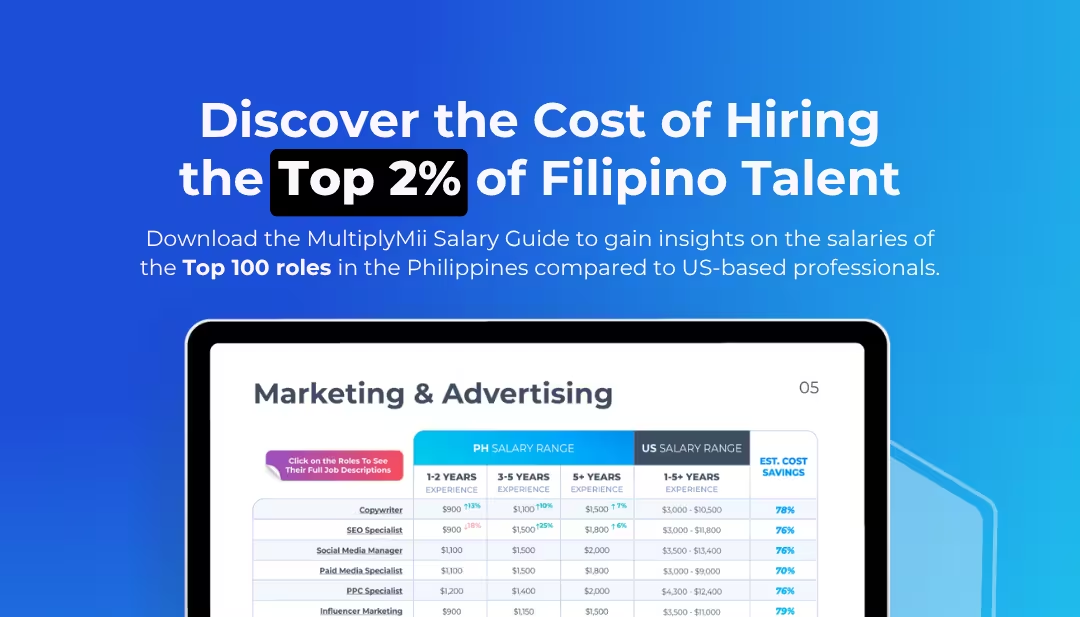
Marketing outsourcing costs vary dramatically based on scope, partner type, and engagement model. Full-service agencies typically charge retainers starting at several thousand dollars monthly. Specialist firms run lower. Dedicated offshore professionals through MultiplyMii can start from around $1,300 monthly for experienced marketing talent.
The more useful question is not what it costs, but what commercial return you expect from the investment and how you will measure it.
Budget alignment features
- Total cost calculation: Account for management time, tools, and any additional platform fees
- ROI framework: Define how you will measure return before signing any agreement
- Scaling flexibility: Understand how costs change as you expand or reduce scope
Budget alignment pros and cons
Pros:
- Clear budgeting prevents surprise expenses
- Outcome focus keeps discussions grounded
- Flexibility planning allows for market changes
Cons:
- Cheapest option rarely delivers the best value
- ROI measurement can be complex for brand-building activities
- Budget constraints may limit optimal staffing levels
6. Communication infrastructure
Outsourced relationships succeed or fail based on communication quality. Partners need structured processes for collaboration, reporting, and feedback. Weekly standups keep everyone aligned. Monthly strategy sessions ensure work stays connected to broader goals.
MultiplyMii addresses this through dedicated Client Success Managers who facilitate communication between clients and their offshore team members.
Communication infrastructure features
- Meeting cadence: Define regular touchpoints before work begins
- Tool selection: Agree on project management and communication platforms
- Response expectations: Set clear standards for turnaround times on feedback and requests
Communication infrastructure pros and cons
Pros:
- Clear processes reduce misunderstandings
- Regular touchpoints catch issues early
- Shared tools create visibility into work in progress
Cons:
- Setup requires upfront time investment
- Over-communication can slow down execution
- Tool proliferation creates its own management burden
7. Ownership boundaries
The most common outsourcing failure mode involves unclear ownership. External partners excel at execution but should rarely own core strategic decisions. Companies that hand off strategy to agencies lose control of their market positioning.
Keep messaging, positioning, and go-to-market strategy internal. Outsource the tactical work that brings strategy to life.
Ownership boundary features
- Strategy ownership: Internal teams maintain control of positioning and messaging
- Execution delegation: External partners handle tactical implementation
- Decision rights documentation: Clear records of who approves what
Ownership boundary pros and cons
Pros:
- Maintains brand consistency
- Reduces dependency on external partners
- Keeps customer insight internal
Cons:
- Requires internal marketing leadership capability
- May limit partner creativity
- Needs clear communication of strategic direction
8. Performance measurement
Define success metrics upfront. What specific outcomes matter? Lead volume? Meeting bookings? Pipeline generated? Content pieces published? Rankings gained?
According to ManpowerGroup's 2026 Global Talent Shortage report, 72% of employers globally reported difficulty filling skilled roles, with sales and marketing ranking among the hardest-to-hire specializations. This context makes measurement even more important when evaluating outsourced alternatives.
Performance measurement features
- KPI definition: Agree on specific metrics tied to business outcomes
- Reporting cadence: Match frequency to engagement type
- Baseline establishment: Document current performance before changes begin
Performance measurement pros and cons
Pros:
- Creates accountability for both parties
- Enables data-driven optimization
- Reduces subjective disagreements about results
Cons:
- Some valuable activities are hard to measure directly
- Metric selection influences behavior
- Short measurement windows may not capture full value
9. Cultural fit evaluation
B2B marketing varies dramatically across industries and geographies. Enterprise software sales cycles look nothing like manufacturing equipment purchases. Healthcare marketing faces regulatory constraints that SaaS companies never encounter.
Partners need to understand your customers, industry context, and competitive landscape. MultiplyMii addresses this through thorough onboarding processes and dedicated team members who learn your business over time rather than rotating between accounts.
Cultural fit features
- Industry experience: Has the partner worked with similar businesses?
- Audience understanding: Do they grasp your buyer's challenges and language?
- Long-term commitment: Will the same people work on your account over time?
Cultural fit pros and cons
Pros:
- Better content resonance with target audience
- Reduced ramp-up time for new initiatives
- Fewer revisions due to misaligned understanding
Cons:
- Deep industry expertise limits partner options
- Cultural learning takes time even with dedicated teams
- May require more upfront onboarding investment
Outsourced Marketing Approaches for B2B Companies
What Questions Should You Ask Before Choosing an Outsourced Marketing Partner?
Capabilities decks and static logo walls don't guarantee operational performance. When evaluating an offshore marketing partner, cut through the sales presentation and test for structural alignment with these four diagnostic questions.
1. Can you demonstrate commercial impact in my niche or just top-of-funnel activity?
- The Benchmark: Demand verified metrics tied directly to revenue: pipeline velocity, customer acquisition cost (CAC), and converted opportunities.
- The Risk: Agencies that hide behind vanity metrics like clicks and impressions while failing to generate actual revenue.
2. Are we building a dedicated team extension or renting a shared agency pool?
- The Benchmark: High-leverage execution requires dedicated, pre-vetted specialists embedded 100% into your workflows, communication channels, and company culture
- The Risk: The classic agency "bait-and-switch," pitching with senior strategists who hand off daily execution to overloaded junior staff juggling a dozen accounts.
3. What does client performance look like at Month 12?
- The Benchmark: Look for proven client and talent retention. Sustainable partnerships yield long-term institutional knowledge, workflow stability, and compounding ROI over time.
- The Risk: Providers that only offer references from recent sign-ups to mask underlying client churn and operational friction.
4. How is international legal, tax, and HR compliance structured?
- The Benchmark: A true strategic growth partner manages the entire Employer of Record (EOR) ecosystem, local labor law compliance, competitive benefit packages, and HR support, allowing you to focus exclusively on strategic leadership.
- The Risk: Freelance platforms or loose agency setups that leave your business exposed to misclassification liabilities, tax risks, and international legal exposure.
How Long Should B2B Companies Expect Before Seeing Results From Outsourced Marketing?
Performance timelines vary by marketing function. To evaluate offshore talent effectively, align your expectations with realistic channel ramp-ups:
The MultiplyMii Standard: The 90-Day Rule
We advise a 90-day minimum commitment before running comprehensive performance reviews. This window provides the necessary runway for tool integration, workflow alignment, and audience research, ensuring you measure true commercial impact rather than premature ramp-up data.

Why MultiplyMii Is the Leading Choice for B2B Marketing Teams
MultiplyMii stands apart through a combination of talent quality, retention focus, and operational support that traditional agencies and freelancer platforms cannot match. Placing over 1,300 offshore professionals with a 91% success rate, MultiplyMii, with its end-to-end remote staffing solutions, has built teams that learn your business and contribute more over time.
For B2B leaders evaluating outsourced marketing services, MultiplyMii removes the uncertainty around hiring quality, retention risk, and compliance complexity. Dedicated Client Success Managers ensure ongoing alignment between your business goals and your team's output.
Ready to explore what dedicated marketing talent could look like for your organization?
Connect with MultiplyMii to discuss your specific needs and learn how other B2B companies have built high-performing offshore marketing teams.

With 9 years of research experience, Denize focuses on the hard questions in the remote staffing industry. As a Content Editor & Researcher at MultiplyMii, she ensures every piece of content moves beyond the surface to address real-world operational challenges and spark meaningful industry conversations. She is a strategist by trade, a researcher by habit, and a coffee enthusiast by necessity.


Your Hiring Cheat Sheet for 2026
Frequently Asked Questions
Outsourced marketing refers broadly to delegating marketing functions externally. Agencies are one type of outsourcing partner. MultiplyMii offers a different model: dedicated offshore professionals who work full-time on your business. This approach builds institutional knowledge and team stability that rotating agency accounts cannot replicate.
B2B companies typically reduce marketing headcount costs by up to 70% compared to US/local hires by leveraging offshore talent. Through MultiplyMii, businesses access pre-vetted, full-time marketing specialists starting at roughly $1,300/month, eliminating local payroll taxes, bloated overhead, and agency markups.
The most commonly outsourced marketing functions include:
- Content Strategy & Copywriting: Articles, lead magnets, and sales enablement collateral.
- SEO & Technical Optimization: Keyword research, page audits, and backlink strategy.
- Paid Media Management: Performance marketing across Google, LinkedIn, and Meta Ads.
- Graphic Design & Creative: Landing pages, ad creative, and brand assets.
- Marketing Automation & Email: CRM hygiene, nurture sequences, and campaign builds.
The three primary risks of outsourcing marketing are:
- Brand Voice Drift: Caused by fragmented communication and high vendor turnover.
- Loss of Strategy Ownership: When agencies withhold campaign data and documentation.
- Misalignment & Overhead: Unclear ownership boundaries between strategy and execution.
MultiplyMii mitigates these risks through dedicated staffing, transparent workflows, full EOR compliance, and 100% IP ownership, ensuring all processes and work products remain yours.
Yes. Early-stage and mid-market B2B companies benefit significantly because they often lack the budget to hire a full suite of local specialists.
By partnering with MultiplyMii, growth-stage businesses build a multi-skilled, dedicated marketing function cost-effectively.