Top 4 Finance and Accounting Outsourcing Options for Startups


Grand View Research’s 2026 report shows that SMEs are leading the charge in adopting finance and accounting outsourcing. As small and medium businesses (SMEs) look to scale efficiently, third-party finance teams are proving to be key drivers of agile, sustainable growth.
Startups today are cutting overhead and optimizing operations with top offshore financial talent. Based on data from the U.S. Bureau of Labor Statistics, demand for accounting professionals continues to grow faster than average, with over 115,000 annual openings expected as existing workers retire or switch careers.
The long-predicted shortage is here: the 2026 Corporate Finance and Accounting Talent Study found that most finance leaders face minor or significant talent shortages, with only 38% reporting no shortages at all.
Which Model Fits Your Startup?
About this shortlist: “Top” refers to a curated selection rather than an independently scored ranking. This list is not exhaustive, and inclusion does not imply or establish superior performance.
1. MultiplyMii
MultiplyMii helps businesses recruit Filipino professionals for specialized roles, including finance and bookkeeping. Its staffing services include:
- End-to-end recruitment
- Employer of Record (EOR) and HR infrastructure
- Structured onboarding and client success
- Specialized functional roles
- Strategic offshoring consulting and tools
While operating on a dedicated staffing model rather than traditional finance and accounting BPO outsourcing, MultiplyMii has been trusted by over 250 businesses to significantly reduce operational expenses without compromising work quality. We guide scaling businesses to seamlessly onboard and integrate dedicated remote professionals into their existing workflows, ensuring complete alignment with internal priorities and direct management.

Why consider MultiplyMii?
Consider this model when a scaling business needs consistent, high-level execution capacity within its existing workflows. Depending on the role and required qualifications, this can include dedicated talent to manage accounts payable, accounts receivable, reconciliations, report preparation, or financial analysis.
MultiplyMii is not a virtual assistant agency. Its core focus is sourcing skilled, career-minded professionals backed by the full HR, legal, and operational infrastructure required to sustain high-performing remote Filipino teams.
Questions to ask
- Which responsibilities should this role own directly, and which require senior internal review?
- How will candidates be evaluated for proficiency in specific accounting software and workflows?
- What technical qualifications, certifications, and experience levels are required for this role?
- Who on the internal leadership team will manage day-to-day priorities, direct workflows, and review outputs?
- What onboarding framework, payroll management, and ongoing HR support does MultiplyMii provide?
Important distinction
A dedicated offshore finance professional supports internal capacity; they do not automatically replace a licensed tax advisor, public auditor, corporate controller, or fractional CFO. The client retains operational oversight and management of outputs. Businesses should maintain appropriate supervision and retain specialized, accredited counsel where legally required.
2. TOA Global
TOA Global is a specialized global outsourcing provider for accounting practices, CPA firms, and corporate finance departments. Its operating model provides access to vetted, job-ready accountants, bookkeepers, and tax specialists who possess 2–6 years of industry experience and hold qualifications up to Certified Management Accountant (CMA) and Certified Public Accountant (CPA).
Why consider TOA Global?
TOA Global is worth evaluating for accounting practices or corporate finance departments looking to scale capacity using certified offshore talent pre-trained in firm-specific accounting standards (including US, UK, and Australian tax/compliance) and cloud software like Xero. Its offering centers around high talent retention and structured professional development delivered through its registered training organization, the Ab2 Institute of Accounting.
Questions to ask
- Which region-specific accounting standards (e.g., US GAAP, Australian ATO/BAS/SMSF) are candidates certified or trained in prior to placement?
- What specific curriculum or certifications through the Ab2 Institute of Accounting will the assigned team members complete?
- How does TOA Global handle data security, physical office environment standards, and client confidentiality compliance?
- Can a team scale up or down based on seasonal peak workloads, such as tax season?
- What tools, software, or workflow management platforms are included versus required to be provided by the client?
Important distinction
TOA Global operates as a talent-enablement BPO provider, not a practice that takes on third-party public accounting oversight. While it places highly trained accountants, the client firm retains ultimate responsibility for signing off on public audits, official tax returns, and client-facing professional standard certifications.
3. Connext Global Solutions
Connext Global Solutions is a custom BPO partner providing client-dedicated offshore teams across core finance, accounting, and revenue cycle management (RCM) functions.
Founded in Hawaii in 2014 by Tim Mobley, the company operates a multi-country footprint across the Philippines, Colombia, India, and Mexico, supporting over 2,700 employees globally. Its operating model provides client-dedicated offshore professionals backed by SOC2-compliant hardware, physical office facilities, and skill-enhancement programs like Connext University.
Why consider Connext Global Solutions?
Connext Global Solutions is worth evaluating for growing companies seeking custom-built offshore teams without the restrictive high minimum headcounts of traditional BPOs. Its co-managed model allows clients to direct daily workflows directly while Connext handles local Employer of Record (EOR) management, HR, infrastructure, and facility compliance.
Questions to ask
- How are SOC2 compliance, data privacy controls, and hardware security managed for finance and accounting roles?
- What training, upskilling, and professional development programs through Connext University will be integrated for the assigned accounting staff?
- What multi-country office location (e.g., Philippines vs. Colombia) is best suited for the required time zone overlap and language needs?
- How does Connext co-manage process performance, SOP replication, and day-to-day operational account support?
- What are the specific timelines from initial role scoping to final talent placement and onboarding?
Important distinction
Connext Global Solutions operates as an offshore staffing and managed operations partner, not an accredited CPA firm or public accounting practice. While it provides client-dedicated finance professionals for roles like AP/AR, general ledger reconciliation, and payroll processing, the client retains operational governance and direct authority over public filings, audit approvals, and official financial sign-offs.
4. Bookkeeper360
Bookkeeper360 offers an all-in-one financial management platform delivering bookkeeping, payroll, tax, HR, and fractional CFO advisory for small businesses, startups, and eCommerce brands.
Founded in 2012 by CEO Nick Pasquarosa, its operating model pairs US-based accounting professionals with proprietary technology that syncs directly with tools like Xero, QuickBooks Online, and Gusto to provide real-time dashboards and cash flow tracking.
Why consider Bookkeeper360?
Bookkeeper360 is worth evaluating for early-stage founders and growing businesses looking for flat-rate monthly bookkeeping, tax preparation, and high-level advisory without the overhead of full-time onshore executives. Its hybrid model is built for companies wanting automated financial reporting alongside access to dedicated CPAs and financial strategists.
Questions to ask
- Which specific responsibilities are covered under the monthly flat-rate bookkeeping plan versus add-on advisory or tax projects?
- How does the Bookkeeper360 app integrate with existing accounting and payroll platforms like QuickBooks Online, Xero, or Gusto?
- What is the meeting cadence and availability for speaking directly with assigned financial advisors or fractional CFOs?
- Are tax strategy, R&D tax credit filings, and year-end tax returns bundled into the core service or billed separately?
- How are communication workflows and day-to-day accounting inquiries managed between internal teams and Bookkeeper360 staff?
Important distinction
Bookkeeper360 provides client advisory, bookkeeping, and business tax filing through its internal team and specialist networks. However, its engagements are structured around back-office financial management and fractional CFO services rather than licensed public audit or attestation work. If a startup requires a formal audit or certified public accounting attestation, those regulated services must be sourced through an accredited provider.
Managed Accounting Services Versus Dedicated Staffing
Organizations should choose an operational model based on ownership and control, not surface-level terminology. Managed accounting services and dedicated staffing solve fundamentally different scaling challenges.
Consider managed accounting services when:
- Outcome-driven deliverables take priority over headcount: The focus is on contracting specific deliverables (e.g., audited statements, tax filings, or completed monthly closes) rather than hiring individual employees.
- Cross-functional coordination is required: The operational scope spans multiple specialized finance domains (e.g., tax compliance, audit readiness, forensic accounting) that do not justify full-time roles.
- Internal supervisory capacity is limited: The organization lacks mature internal management, documented workflows, or dedicated oversight capacity to direct day-to-day accounting execution.
- Project-based evaluation is needed: The business prefers structured, task-defined engagements for discrete bookkeeping, tax preparation, or short-term advisory projects.
Consider dedicated staffing when:
- Recurring operational volume exists: The business has steady, long-term operational workflows that require continuous, full-time team capacity.
- Direct workflow integration is critical: The organization requires professionals who work natively inside its proprietary systems, platforms, and internal communication channels.
- Internal leadership and oversight are established: Management is equipped to assign daily priorities, establish SOPs, maintain quality standards, and review final outputs.
- Long-term capability building is the goal: The company aims to expand internal capacity and retain direct operational control while offloading recruitment, local HR, compliance, and employment administration.
Consider a hybrid model when:
- A balance of daily execution and specialized oversight is required: Dedicated team members handle ongoing execution, such as daily reconciliations, accounts payable, and reporting schedules, while specialized external firms handle regulatory tax filings, statutory audits, or high-level fractional CFO strategy.
How to Choose an Offshoring Partner for Finance & Accounting
Scaling an internal finance department requires a clear, methodical approach to evaluating potential global talent and offshoring partners. Before requesting proposals or initiating recruitment, organizations should assess prospective partners against five core operational criteria.
1. Define the operational gaps
Outline specific bottlenecks and execution challenges before contacting offshoring partners. Common operational gaps include:
- Overdue bank and account reconciliations
- Inconsistent or delayed month-end close reporting
- Uncollected accounts receivable and unpaid vendor invoices
- Unclear short-term cash flow forecasting
- Incomplete reporting packages for board members or investors
Clearly distinguish between routine execution (e.g., transactional processing, data entry, schedule preparation) and strategic oversight (e.g., technical accounting interpretation, financial planning, senior sign-offs). This prevents paying high-level advisory retainers when the actual requirement is dedicated daily execution capacity.
2. Require concrete operational SLAs and governance frameworks
Evaluate offshoring partners on tangible execution frameworks rather than broad service descriptions. Request specific operational documentation during the evaluation process:
- Sample Deliverable Standards: Review formatting, detail, and quality control benchmarks for financial schedules.
- Proposed Month-End Close Calendars: Confirm expected timelines, milestone markers, and operational pacing.
- Responsibility Assignment Matrix (RACI): Establish explicit task ownership between internal managers and offshore staff.
Ensure the engagement framework specifies exact deliverables, workflow dependencies, and clear escalation pathways for missing inputs or operational delays.
3. Verify system proficiency and technical experience
Assess an offshoring partner's ability to source and support talent tailored to the company's operating environment:
- Structural Compatibility: Experience supporting your industry, business model, accounting basis (accrual vs. cash), and multi-entity global structures.
- Tech Stack Mastery: Hands-on proficiency in core financial systems (e.g., NetSuite, QuickBooks Online, Xero, Bill.com, Gusto).
- Reference Validation: Request case studies and verified references from comparable businesses rather than relying on unverified claims.
4. Analyze total cost of ownership (TCO)
Ensure transparent, apples-to-apples cost comparisons across different global delivery models by accounting for all direct and indirect expenses:
- Managed BPO/Agency Models: Include recurring vendor markups, project retainers, historical cleanup fees, implementation costs, and software add-ons.
- Dedicated Staffing Models: Evaluate transparent direct compensation, local statutory benefits, recruitment, equipment, physical infrastructure, local HR/EOR management, and internal supervisory time.
Do not evaluate a basic, transactional bookkeeping rate against a dedicated staffing model or fractional leadership service as if the operational scope and control levels were identical.
5. Establish information security, access control, and governance
Maintain strict operational security, data privacy, and internal controls across all global staffing touchpoints:
- System Permissions: Enforce the principle of least privilege for cloud accounting software, payment portals, and confidential data repositories.
- Segregation of Duties: Ensure no single remote professional holds unchecked authority to create vendors, approve payments, and reconcile transactions simultaneously.
- Compliance & Offboarding Protocols: Verify local Employer of Record (EOR) compliance, IP rights protection, data security standards (e.g., SOC2, hardware encryption), and secure offboarding procedures.
Choose the Best Model That Matches Your Finance Talent Gap
There is no universal best finance outsourcing or offshoring firm for every startup. The practical choice depends on whether you need recurring execution, managed accounting deliverables, tax expertise, strategic advice, or a combination.
Compare the scope, evidence, responsibilities, and total commitment. Then choose the arrangement that gives your business reliable financial operations without leaving important review or compliance work unowned.
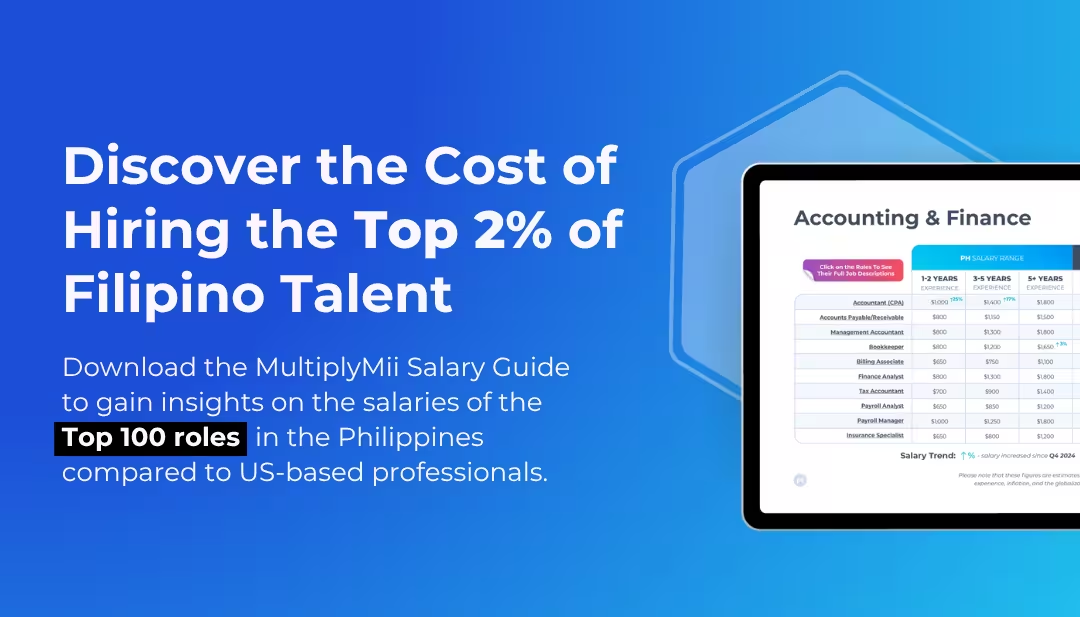
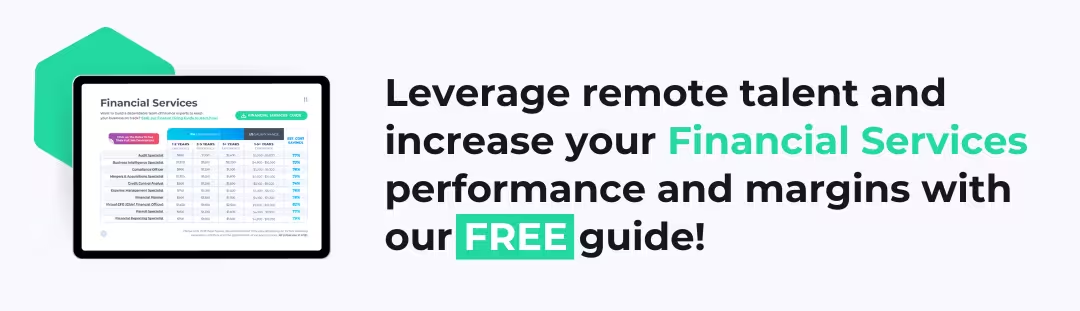
If your goal is to build dedicated, high-performing internal finance capacity with vetted remote Filipino professionals, partner with MultiplyMii.
Book a free strategy session with MultiplyMii’s remote staffing experts today. Let us define your specific role requirements, structure your team, and establish the complete HR and operational support your growing business needs to scale.

As Head of Operations at Escala, Jas ensures that transitioning into remote staffing is a seamless experience for new partners. She is an expert in workflow optimization, dedicating her days to keeping internal operations lean, agile, and effective.






Got questions about hiring offshore? Ask Lia.


Frequently Asked Questions
The leading finance and accounting (F&A) options for startups include Bookkeeper360, Connext Global Solutions, TOA Global, and MultiplyMii:
- Bookkeeper360: US-based cloud bookkeeping, tax, and CFO platform integrating with Xero and QuickBooks.
- Connext Global Solutions & TOA Global: Specialized managed BPO providers for back-office and accounting-exclusive teams.
- MultiplyMii: Dedicated offshore staffing and EOR partner connecting Western businesses with skilled Philippine finance professionals for direct, long-term integration.
No. A managed accounting provider contracts to deliver specified services. Hiring a dedicated remote professional adds capacity to your team and generally requires internal direction and review. Confirm the responsibility split in the agreement.
You can offshore most transactional, routine, and analytical accounting functions. Common roles and workflows transferred to offshore accounting teams include:
- Core Accounting: Accounts Payable (AP), Accounts Receivable (AR), bank and credit card reconciliations, general ledger maintenance, and monthly close preparation.
- Compliance & Payroll: Payroll processing, expense management, sales tax processing, and tax return preparation.
- Financial Analysis: Financial modeling, cash flow forecasting, budgeting, and monthly board reporting package preparation.
Remote finance talent urgently needed?
Join MultiplyMii’s Talent Overflow Program to receive a bi-weekly digest featuring pre-screened, high-caliber remote Filipino finance and accounting professionals ready to drive your business growth.
Pricing varies by transaction volume, reporting complexity, cleanup needs, and service scope. Managed service retainers range from basic bookkeeping packages to high-tier CFO packages, while dedicated offshore staffing models typically cut direct operational costs by 70-80% compared to equivalent onshore hires.
Yes. A dedicated professional can support routine workflows while external specialists provide tax, controller, or CFO support. Define the preparation, review, approval, and filing responsibilities so work does not fall between providers.