


7 Reasons Companies Hire Filipino Virtual Assistants

.avif)
Building a high-performing remote team can feel like assembling a puzzle with missing pieces. You need professionals who understand your business, communicate clearly, and deliver results without constant oversight.
That search is becoming significantly easier in the Philippines. According to a 2026 report by Remitly, Virtual Assistant has overtaken 'Doctor' as the top dream job among Filipinos. This reflects a massive cultural shift toward high-level remote careers.
For companies looking to scale efficiently, virtual assistants in the Philippines have become the strategic choice for sustainable growth.
MultiplyMii connects global businesses with this elite pool of talent, going far beyond basic task delegation to build deeply integrated remote units. Here are seven key reasons companies across industries are leveraging the Philippines for strategic remote staffing.
Quick Guide: 7 Reasons Companies Hire Filipino Virtual Assistants
- MultiplyMii: The top choice for pre-vetted Filipino remote professionals with end-to-end support
- World-class English proficiency & business communication: Near-native communication skills for client-facing and internal roles
- Cost-effective talent: Access degree-educated professionals at competitive rates
- High cultural alignment & value-driven ownership: Familiarity with Western business practices and communication norms
- Technical capabilities: Proficiency across CRMs, project management tools, and industry software
- Strategic time zone flexibility & asynchronous scale: Overlap with US and global business hours for real-time collaboration
- University-educated workforce & domain expertise: Over 500,000 college graduates annually with specialized degrees
How We Identified These Reasons for Hiring Filipino Virtual Assistants
Finding the right remote hire goes beyond scanning resumes. We analyzed what makes Filipino virtual assistants a consistent choice for companies scaling their operations across marketing, finance, customer support, and eCommerce.
- Communication quality: We evaluated English proficiency rankings and real-world client feedback on written and verbal skills
- Educational background: We reviewed the degree qualifications and specialized training common among Filipino professionals
- Cost-to-value ratio: We compared compensation expectations against output quality and role complexity
- Cultural fit indicators: We assessed how Filipino remote workers integrate into international team structures
- Technical tool proficiency: We identified common platforms Filipino VAs work with, from Salesforce to Shopify
- Retention and loyalty patterns: We examined long-term employment data and client satisfaction scores
The 7 Reasons Companies Hire Filipino Virtual Assistants
1. MultiplyMii
MultiplyMii is an end-to-end offshore staffing partner that helps growing companies build, scale, and retain dedicated, pre-vetted Filipino talent with full HR, payroll, and compliance support.
Since 2019, MultiplyMii has placed over 1,200 remote professionals while maintaining a 91% retention success rate. Rather than acting as a transactional agency, MultiplyMii matches companies with the top 2% of Filipino talent across finance, operations, marketing, and software engineering.
What sets MultiplyMii apart is its operator-led origin: built by founders who scaled businesses using offshore talent, the framework prioritizes long-term ROI over quick task-filling. MultiplyMii handles Employer of Record (EOR) functions, DOLE labor compliance, statutory benefits, and structured onboarding via its proprietary 7Cs Framework. To protect client capital, every placement includes a replacement guarantee alongside dedicated Client Success Managers to ensure long-term performance.
Core features:
- Top 2% Technical Vetting: Rigorous role-specific screenings before candidates reach your shortlist.
- End-to-End Compliance & EOR: Complete management of Philippine labor laws, tax withholding, and statutory benefits.
- 7Cs Onboarding Framework: A structured integration roadmap that shortens time-to-productivity.
- Lifetime Talent Protection: Risk-free replacement guarantee that safeguards recruitment capital.
Pros & Cons
- Pros: Access to university-educated professionals across 100+ specialized roles; complete operational HR support; 91% hire success rate.
- Cons: Vetting depth requires a 2–4 week placement timeline; designed exclusively for full-time, dedicated team building rather than short-term gig work.
2. World-class English proficiency & business communication
The Philippines ranks among the world's most English-proficient nations, providing a remote workforce that integrates into Western corporate environments with minimal friction.
Ranking 2nd in Asia on the EF English Proficiency Index, the Philippines maintains English as a primary language of instruction from primary school through higher education. This creates a talent pool that naturally operates in complex written and verbal business contexts.
For executive leaders, this eliminates the communication tax often associated with global teams. Filipino remote professionals comfortably draft executive correspondence, manage client-facing interactions, and lead strategic meetings. Familiarity with Western idioms and corporate nuance speeds up cross-functional alignment and minimizes project rework.
Core Features:
- Executive Correspondence: Native-level written fluency for reports, brand copy, and client communications.
- Neutral Accent Patterns: Clear, effortless voice communication for client management and customer success.
- Contextual Nuance: Natural understanding of Western business norms, tone, and professional boundaries.
Pros & Cons
- Pros: Minimizes onboarding friction; enables direct client-facing capability; reduces documentation revision cycles.
- Cons: Nuanced industry jargon still requires initial orientation; asynchronous communication rules should be established early.
3. Cost-effective talent
Hiring skilled Filipino talent provides 60–80% in labor cost efficiency, allowing companies to extend runway and scale back-office capability without sacrificing quality.
Building remote teams in the Philippines is not about finding discount labor—it is a strategic play for capital efficiency. By leveraging localized cost-of-living standards, businesses access senior CPAs, Financial Controllers, and Marketing Strategists at rates that provide immense unit-economic leverage.
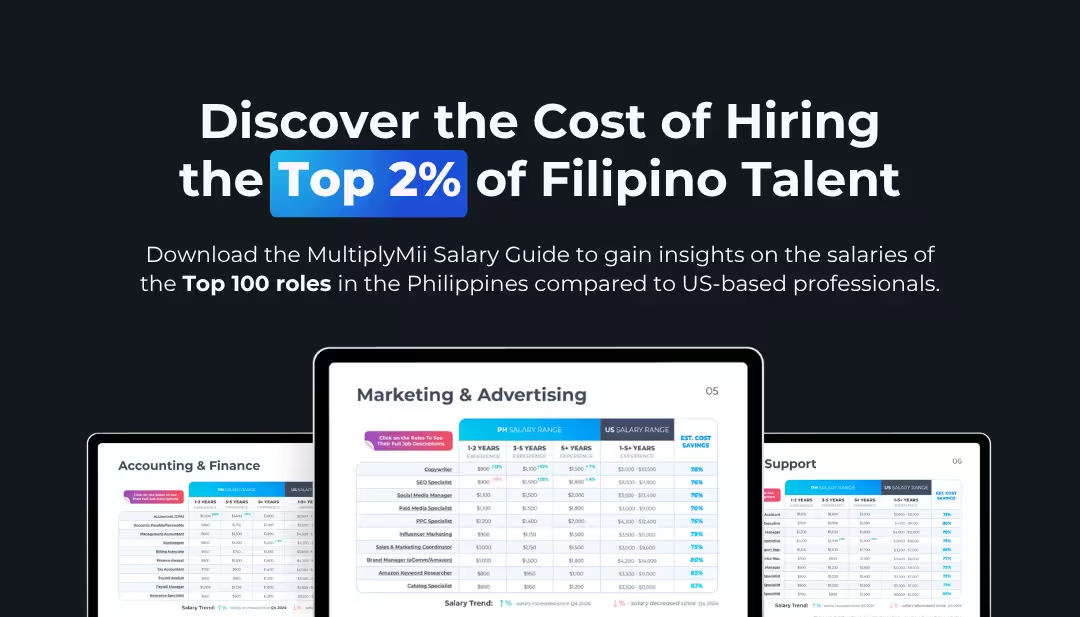
For founders and CFOs, these savings can be reinvested directly into core R&D, market expansion, or building out multi-layered operational support. MultiplyMii’s 2026 Salary Guide provides transparent benchmarks across 100+ specialized positions to ensure competitive, retention-focused compensation.
Core Features:
- All-Inclusive Pricing: Transparent monthly investment covering salary, benefits, and HR compliance.
- Zero Infrastructure Overhead: Remote setup eliminates regional real estate and equipment liabilities.
- Scalable Unit Economics: Expand functional capacity systematically as revenue scales.
Pros & Cons
- Pros: Reinvest up to 80% overhead savings into growth; hire specialized teams rather than single generalists.
- Cons: Foreign exchange adjustments must be managed; top 2% specialized roles command premium local rates.
4. High cultural alignment & value-driven ownership
A shared history of Western business integration equips Filipino professionals with direct communication habits, strong accountability, and a proactive problem-solving mindset.
Filipino corporate culture aligns naturally with Western management expectations. Professionals are accustomed to flat hierarchies, agile workflows, and outcome-oriented KPIs.
Central to the workplace culture is the concept of "Malasakit"—a deep sense of personal care and dedication to organizational success. In practice, this translates to team members who take true ownership of their outcomes, identify process bottlenecks independently, and act as long-term strategic stewards of your business rather than distant task-takers.
Core Features:
- Outcome Ownership: Driven by cultural values of accountability and dedication to collective goals.
- Agile Adaptability: High receptivity to shifting priorities and evolving operational frameworks.
- Seamless Team Integration: Rapid culture-fit building with domestic team leads and department heads.
Pros & Cons
- Pros: Shorter culture ramp-up time; strong retention; high loyalty and commitment to company growth.
- Cons: Initial deference to authority may require managers to actively invite feedback; local holiday calendars require planning.
5. Technical capabilities
Filipino virtual professionals possess advanced proficiency in modern SaaS, CRM, e-commerce, and ERP platforms, enabling immediate workflow integration.
Rather than spending months training new hires on standard technology stacks, companies can source professionals who are already expert users. From enterprise CRMs (Salesforce, HubSpot) to operations tools (Asana, ClickUp, NetSuite), skilled talent enters your organization ready to execute.
For specialized sectors like eCommerce, digital marketing, and accounting, candidates bring direct experience with Shopify, Amazon Seller Central, Meta Ads Manager, QuickBooks, and Xero. This tech-readiness accelerates time-to-value and reduces supervisory friction.
Core Features
- Platform Fluency: Pre-existing expertise in top enterprise SaaS tools and ERP systems.
- Domain Specialization: Specialized experience in e-commerce, digital marketing, and full-charge bookkeeping.
- Fast Tool Adoption: High capacity for mastering proprietary, custom internal software.
Pros & Cons
- Pros: Reduces tool training from weeks to days; immediate execution on critical software workflows.
- Cons: Custom, proprietary tech stacks still require dedicated onboarding documentation.
6. Strategic time zone flexibility & asynchronous scale
Operating across a 12-to-16-hour time zone difference enables a continuous, 24-hour business cycle that accelerates project turnaround times.
A 12-hour gap transforms operations through a "follow-the-sun" workflow. Tasks assigned at the end of the U.S. or European business day are completed overnight, allowing executive leads to wake up to finalized reports, resolved support tickets, and updated code repositories.
Additionally, the Philippine talent market offers exceptional shift flexibility. Professionals routinely work overlapping hours or full graveyard shifts to support real-time collaboration with Western headquarters when synchronous alignment is required.
Core Features:
- 24-Hour Execution: Continuous operational momentum across time zone shifts.
- Shift Customization: Flexible scheduling options including full business-hour overlap.
- Accelerated Delivery: Shorter project turnaround cycles through combined day-night workflows.
Pros & Cons
- Pros: Extended operational coverage without overtime penalties; faster execution cycles.
- Cons: Requires deliberate asynchronous communication protocols to avoid handover bottlenecks.
7. University-educated workforce & domain expertise
Higher education is a standard baseline in the Philippine professional workforce. Degree programs in Accountancy, Business Administration, Computer Science, and Mass Communication equip candidates with strong analytical foundations.
Beyond formal degrees, professionals actively hold global credentials—such as Certified Public Accountant (CPA) licenses, PMP certifications, and specialized technical accreditations. When partnering with MultiplyMii, companies gain access to candidates who bring verified domain expertise directly aligned with strategic business goals.
Core Features:
- Degree-Educated Talent: Higher education baseline across executive and operational functions.
- Certified Specialists: Access to licensed CPAs, certified project managers, and accredited digital marketers.
- Growth Mindset: Strong professional emphasis on continuous learning and career advancement.
Pros & Cons
- Pros: Strong analytical background; verified qualifications reduce hiring risk; faster training absorption.
- Cons: Highly specialized credentials (like CPAs or Senior Controllers) command top-tier compensation.
Comparison Table: Reasons Companies Hire Filipino Virtual Assistants
What Tasks Can Filipino Virtual Assistants Handle?
Offshore Filipino professionals deliver both transactional support and high-impact specialized capabilities across finance, marketing, operations, and software development.
Rather than limiting remote hiring to basic administrative tasks, modern organizations leverage skilled Filipino talent to build out entire functional departments. Depending on your operational growth stage, offshore roles range from core coordination to specialized domain leadership:
- Strategic Administration & Executive Support: C-suite calendar optimization, executive inbox management, travel logistics, and workflow documentation that preserve leadership bandwidth.
- Finance, Accounting & FP&A: Full-charge bookkeeping, accounts payable/receivable, payroll processing, month-end closes, and Controller-level financial reporting.
- Digital Marketing & Growth: Content strategy, performance advertising (Meta/Google Ads), SEO execution, social media management, and marketing automation workflows.
- Customer Success & Operations: Technical tier-1/tier-2 support, order processing, CRM management (Salesforce, HubSpot), and supply chain/e-commerce operations.
- Software Engineering & Data: Full-stack development, QA automation, database management, and business intelligence reporting.
Starting with a targeted role allows companies to build immediate operational leverage. As business needs evolve, high-performing offshore professionals scale into Operations Managers, Lead Accountants, or Department Heads, turning remote placements into long-term strategic assets.
How Do You Evaluate a Filipino Virtual Assistant Before Hiring?
Evaluating international talent effectively requires a multi-stage process combining objective technical assessments, soft-skills testing, and cultural alignment interviews.
To eliminate hiring risks and ensure day-one productivity, high-performing organizations rely on a structured four-part vetting framework rather than relying on self-reported resume claims:
- Role-Specific Technical Assessments: Administer practical skills tests matching your specific software stack (e.g., advanced Excel/financial modeling for accounting candidates, platform-specific tests for CRM managers).
- Communication & Business Acumen Screening: Evaluate written correspondence, real-time verbal fluency, and contextual understanding of Western corporate communication norms.
- Behavioral & Cultural Alignment Interviews: Assess problem-solving methodology, adaptability to flat hierarchies, receptivity to feedback, and personal ownership ("Malasakit").
- Credential & Reference Verification: Perform background checks, verify degree credentials from top universities, and contact previous employers to validate past execution history.

Why MultiplyMii Is the Top Choice for Filipino Virtual Assistants
Companies hiring Filipino virtual assistants face a choice: navigate the process independently or partner with experts who specialize in this market. MultiplyMii has placed over 1,200 professionals since 2019, developing deep knowledge of what makes offshore hiring succeed.
The difference shows in the details. Dedicated recruiters understand role requirements across Amazon, eCommerce, agencies, and professional services. The 7Cs Onboarding Framework accelerates integration. Ongoing support from Client Success Managers addresses issues before they impact productivity.
For companies serious about building remote teams that deliver results, MultiplyMii offers the infrastructure and expertise that independent hiring cannot match. The combination of talent access, compliance management, and long-term support creates conditions where offshore hiring succeeds. Book a strategy session to explore how Filipino virtual assistants can support your growth objectives.

With 9 years of research experience, Denize focuses on the hard questions in the remote staffing industry. As a Content Editor & Researcher at MultiplyMii, she ensures every piece of content moves beyond the surface to address real-world operational challenges and spark meaningful industry conversations. She is a strategist by trade, a researcher by habit, and a coffee enthusiast by necessity.


Your Hiring Cheat Sheet for 2026
Frequently Asked Questions
Filipino virtual assistants typically cost 60-80% less than equivalent US-based roles. Rates vary based on experience level, specialized skills, and whether you hire independently or through a staffing partner. MultiplyMii's 2026 salary guide helps you benchmark expected compensation across 100+ positions.
The vast majority of remote professionals in the Philippines hold university degrees in business, accountancy, marketing, or computer science.
Beyond formal tertiary education, top-tier Philippine talent holds globally recognized certifications, such as CPA licenses, PMP credentials, and platform accreditations in NetSuite, QuickBooks, Salesforce, and Amazon Seller Central.
MultiplyMii’s multi-stage technical screening isolates the top 2% of pre-vetted candidates with verified execution history.
Offshore Filipino professionals fulfill roles across the entire corporate structure, moving well beyond basic administrative tasks to deliver high-level operational execution:
- Finance & Accounting: Bookkeepers, Payroll Managers, Financial Analysts, CPAs, and Financial Controllers.
- Digital Growth & Marketing: Performance Marketers, Content Leads, SEO Specialists, and Marketing Automation Engineers.
- Operations & E-Commerce: Amazon/Shopify Account Managers, Supply Chain Coordinators, and Project Managers.
- Software Engineering & Data: Full-Stack Developers, QA Automation Engineers, and BI Analysts.
Shift from domestic talent scarcity to offshore through MultiplyMii’s Talent Overflow and scale your business without limits.
Working with an operator-led recruitment partner like MultiplyMii yields interview-ready candidate shortlists within 2 to 3 weeks.
This timeframe includes multi-stage technical assessments, background checks, and soft-skills evaluations. Following selection, hires go through MultiplyMii's structured 7Cs Onboarding Framework to minimize ramp-up friction and align with your company's operational key performance indicators (KPIs) from day one.
Filipino VAs combine English proficiency, Western cultural alignment, familiarity with technical tools, and strong educational backgrounds. The Philippines also has a mature BPO industry, meaning many professionals have prior experience supporting international companies remotely.


